嚴勛達
2010-1-10
文學裡的視覺語言 — 訪問陳滅
觀察照片,可見攝者的眼所注視;誦讀詩,更能會作者的心所關懷。詩人陳滅作品云云,其筆下,世界似乎盡是荒謬、無奈。為甚如許?定是異人。究竟陳滅的眼以至心如何異於平常?且以訪問一窺。
何謂美?人人所想各殊。以高官眼,是整齊劃一、歐岸風情;以少年眼,或是皎男瘦女、名牌標貼;於陳滅而言,卻是流浪醉漢、拉架販人。其多受大眾所忽視,然而其真,正是其美。陳滅自白:「路邊推銷者,諸如寬頻、問卷、電話、信用卡,一皆隱藏原來面目;唯掩檔收架,始可顯露個性:只為真實面目不得賺取薪金而已。如此種種,正是香港時下現象。我亦生長於斯,命運共同,自然感如身受。」的確,香港人命運一樣,無不從商,日夜緊張營役。張開拉架,催眠自己:尊嚴不貴;掩蓋拉架,形神勞累——明日繼續。筆者忽想:「陳」是故舊,「滅」是燈燼。或許夜半燈熄,櫥窗一切簇新都成廢舊,始復其原來面貌。陳滅所留意,或許正是此「陳滅」時候。
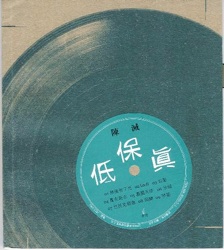
真實是美,然而所謂真實,陳滅的看法又異。他解釋道:「原始、粗糙較接近真實。以音響為例,倘若逼真如現場,便非音響此形式所應有。我一輩人所熟悉,是電視和收音機,一旦逼真,徒然失去音響感覺。又以畫為例,老師教導學生,總叮囑繪畫須具畫感:否則何異於照片。」或許盡減修飾不足,或者極力像真不夠,唯有保存形式特徵,才是所願見的真實。未知準確否?陳滅在其著作《低保真》,也有探究何謂真實,至於捕捉哪樣真實,並延伸至社會各事。
至如視覺構圖,上文學課,應曾論及:詩非傾訴情感悲喜與否,卻勾勒輪廓,引起讀者記憶。由讀者憑藉過往經驗,感覺悲歡與離合。於是,詩和視覺便有莫大關係。陳滅舉例:「如張繼詩『月落烏啼霜滿天』1,排列『月落』、『烏啼』和『霜滿天』三種意象,不須連接,純靠讀者重疊、組合,便得出詩的效果。」此手法其實常為各大詩人所採,譬如:李白「西風殘照,漢家陵闕」2和司空曙「雨中黃葉樹,燈下白頭人」3。至如杜甫,則更喜以極大極小相互襯托,例如:「天地一沙鷗」4、「乾坤一腐儒」5和「酒肆人間世」6云云。大小並排,其質愈見。可知組合中各意象歧異,更能發揮效用。
詩和視覺藝術諸如繪畫和卡通同具優勢,是能寫看不見者,甚至超乎現實。陳滅稱之為「詩歌變形」。其詩:「對煙說禁忌的話,它卻把禁忌都留下」7、「可否把世界熄去,把煙霧留下」8、「垃圾哼著歌謠,綻放七彩的汁液在天空」9,一見深刻,形象新鮮。融合真實和想像,以變形描寫荒謬事物,配合無縫。
備注:
1見張繼詩〈楓橋夜泊〉。
2見李白詞〈憶秦娥〉。
3見司空曙詩〈喜外弟盧綸見宿〉。
4見杜甫詩〈旅夜書懷〉。
5見杜甫詩〈江漢〉。
6見杜甫詩〈琴臺〉。
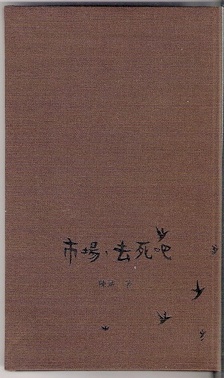
7、8見陳滅(2008)。《市場,去死吧.煙話》。頁96。
9見陳滅(2008)。《市場,去死吧.垃圾的煙花》。頁75。
Interviewing Chen Mie-- The Visual Languages In Literature
Reporter: Yim Fan Tat
We see what the photographers had attentively observed in their works; and we comprehend the writers' minds through reading their poems. Among all the works done by the poet Chen Mie, the world seems to be filled with absurdity and helplessness. But why? He must be an odd person. Let's find out how odd (or extraordinary) he is by interviewing him.
What is beauty? It varies in every beholder's mind. As for Chen Mie, it is in the drunken tramp or within the poster-stand seller. Those being neglected yet with their truthfulness that reveals its beauty. 'Sales on the streets like those who do surveys or sell broadband network services, cell phones, credit cards... all hide their real selves; once they are off from work clearing their booths, they will then reveal their true personality: just only because their truthful faces can earn them any penny. Cases and scenes as such, are exactly the phenomena in Hong Kong now. I grow up here and share a lot of the same destiny with them, it is all natural as I feel like them,' confessed by Chen.
Truthfulness is beauty, and Chen has a distinct definition for truthfulness. He explained, 'The primitive, roughness are more approximate to truthfulness. Take the audio system as an example: if you want to enjoy the lifelike scenes as if you were there on the site, you have to actually be there and no audio systems like speakers or amplifiers could substitute. What the people of my generation is familiarized with, are TV and radio, of which the sounds produced are coarse but not 'real' like any stereo sound we are having now. Take painting as another example, the masters always remind their art students to articulate their aesthetic senses with their strokes and paints in their work, or else they are no different from documentary photographs.' May be the truth lies in what one wants to see, hence the only way is to capture the characteristics of the medium of the art form--- either aiming to minimize the deficiency of the modifications, or to cover for the inadequacy of the resemblance. Is this interpretation accurate? In his book Di Bao Zhen, the meaning of truthfulness is being explored, of which also extended to ranges of social issues in the discussions of which kind of truthfulness to capture.
Invisible in its form with just paints, strokes and characters; poems and visual art share the privileges like paintings and cartoons do--- they are beyond the real. Chen calls this 'The Transformation of Poems'. Vividly 'impressing' his readers instantly, he wrote, 'speaking of taboos to the smokes, and the smokes imprinted all the taboos' (Qtd. Chen, 2008:96)1, 'can the world be extinguished and let the smokes stay' (Ibid.)2, 'the trash humming the songs and splashing colourful spills into the sky' (Qtd. Chen, 2008:75)3 . Mixing the real and the imagined, it sounds perfect to see the transformations of the absurdity.
Remarks:
1,2 Chen Mie 'Market, go to hell!--- Smokes say' (2008), p.96.
3 Chen Mie 'Market, go to hell!--- Fireworks of the Trash' (2008), p.75.